Katharina Prato
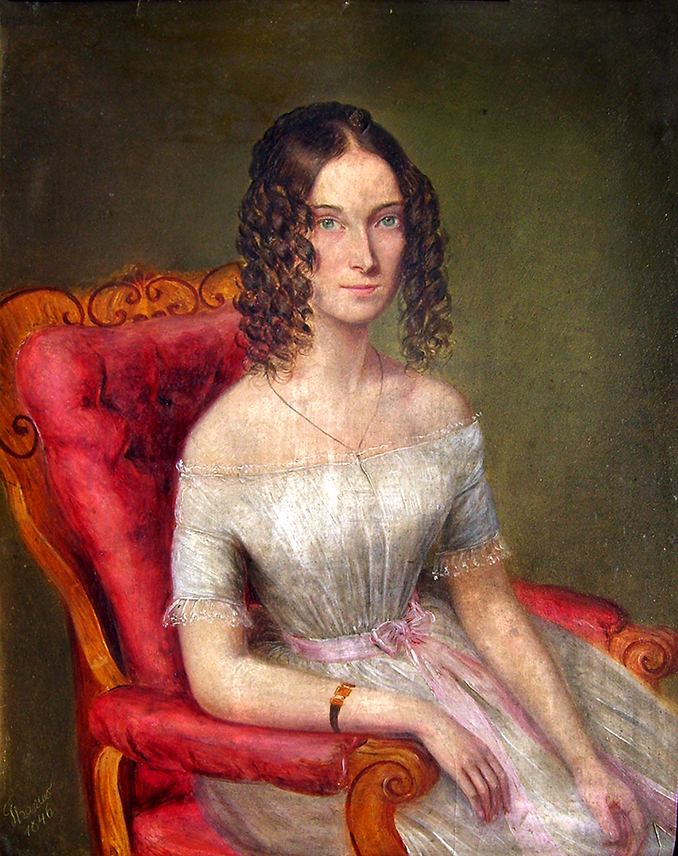
Survival advisor for the kitchen
„My main purpose was to make this work useful as a ‘guide for beginners’, especially for aspiring housewives. For this reason, I have only set up meal plans for a small number of people and have focused my attention mainly on the needs of the middle class.“
The ‘writing culinary artist’ was in vogue in the 19th century, when women set the tone in writing best-selling cookbooks. Before that, with few exceptions, it was men who dominated this profession. Katharina Polt was born in Graz, the daughter of a man of independent means. As was customary for young ladies of her social standing at the time, she was taught French and piano in addition to domestic skills. At the age of 40, she married her first husband, Eduard Pratobevera, from whose surname she later derived her pseudonym “Prato”. As her husband suffered from stomach problems, she began to invent dishes for him and write down the recipes. Eduard Pratobevera died after only one year of marriage, so, in 1861, Katharina married Josef von Scheiger, Director of Posts for Styria and Carinthia, whom she accompanied on his official trips. It was during these trips that she discovered her passion for collecting recipes at home and while travelling, which she first published in a cookbook in 1858.
She realised that many housewives, especially in the middle classes, had to cook themselves instead of being able to leave this work to a cook, as was the case in the upper classes. That is why it was important to her that her cookbook should also be a practical guide for beginners. Thus, ‘Die Prato’ became known at home and abroad for her phrase “Man nehme” (Take / add) – still the epitome of a German-language cooking instruction today. By 1857, her cookbook had been published in 80 editions under the titles Die süddeutsche Küche (South German Cuisine) and Die große Prato (The Large Prato), with over 500,000 copies printed, translated into more than 16 languages, and repeatedly honoured at culinary exhibitions. After her death, the cookbook was republished in abridged form as Die kleine Prato (The Small Prato).
In 1873, Katharina Prato wrote Die Haushaltungskunde. Ein Leitfaden für Frauen und Mädchen aller Stände (Housekeeping. A Guide for Women and Girls of All Backgrounds), the first specialist book published in the Habsburg Monarchy to cover all areas of domestic work. Her social commitment is less well known: E.g., she founded the Graz-based association Volksküche (People’s Kitchen), a vocational school for girls, and several kindergartens, and was also active in the association Frauenheim (Women’s Home).