Martha Tausk
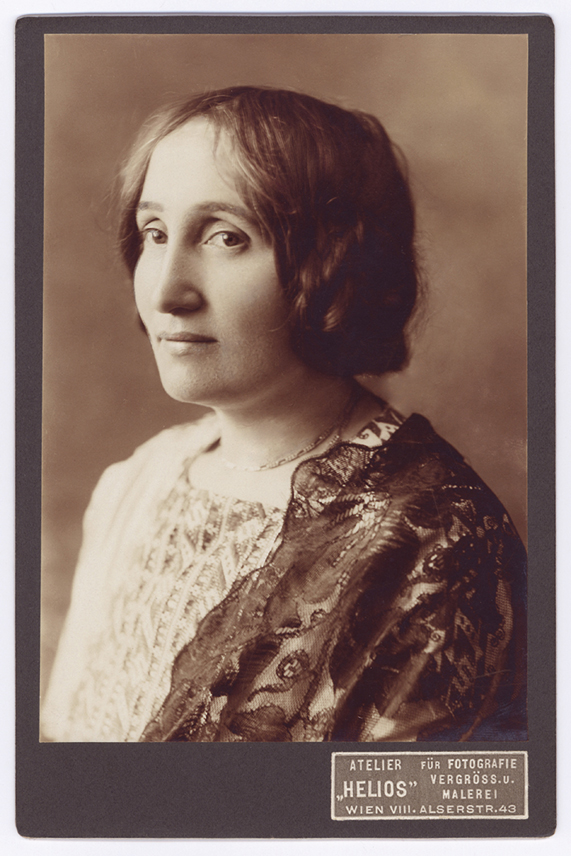
One of the first female members of the Styrian State Parliament
Martha Frisch grew up in Vienna in a Jewish, liberal bourgeois family, which meant that she was exposed to the concerns of the labour movement and the women’s movement at an early age. She attended commercial school and received private tuition from Marianne and Auguste Fickert, the latter of whom was an activist in the liberal bourgeois women’s movement. In 1900, she married Victor Tausk, who later became a psychoanalyst, and they had two sons. The marriage ended in divorce in 1908, and Martha Tausk, now a single mother, had to provide financially for herself and her sons.
Before the First World War, she joined the Social Democrats and campaigned for women’s suffrage, which was introduced in 1919. Johann Resel brought her to Graz in 1917, where she initially worked on the board of the General Workers’ Health Insurance Fund. As an advocate for social insurance, she was able to bring about improvements in legislation for home workers and domestic servants. Among other things, she called for the abolition of the ban on marriage for women in public service and compulsory insurance for married couples, and advocated birth control (§144).
From 1918 onwards, Martha Tausk was a member of the Styrian Provincial Assembly. In 1919, she was elected to the Styrian state parliament as the first Social Democrat alongside Marianne Kaufmann and Olga Rudel-Zeynek (both members of the Christian Social Party). In 1928, she was invited by Friedrich Adler to join the Socialist Workers’ International in Zurich, where she published the women workers’ newspaper Das Frauenrecht (Women’s Rights).In 1934, she initially returned to Austria, but after Austria’s annexation by the Third Reich, she emigrated to Nijmegen in the Netherlands, where she became involved in refugee aid and lived until her death.