Mela Hartwig-Spira
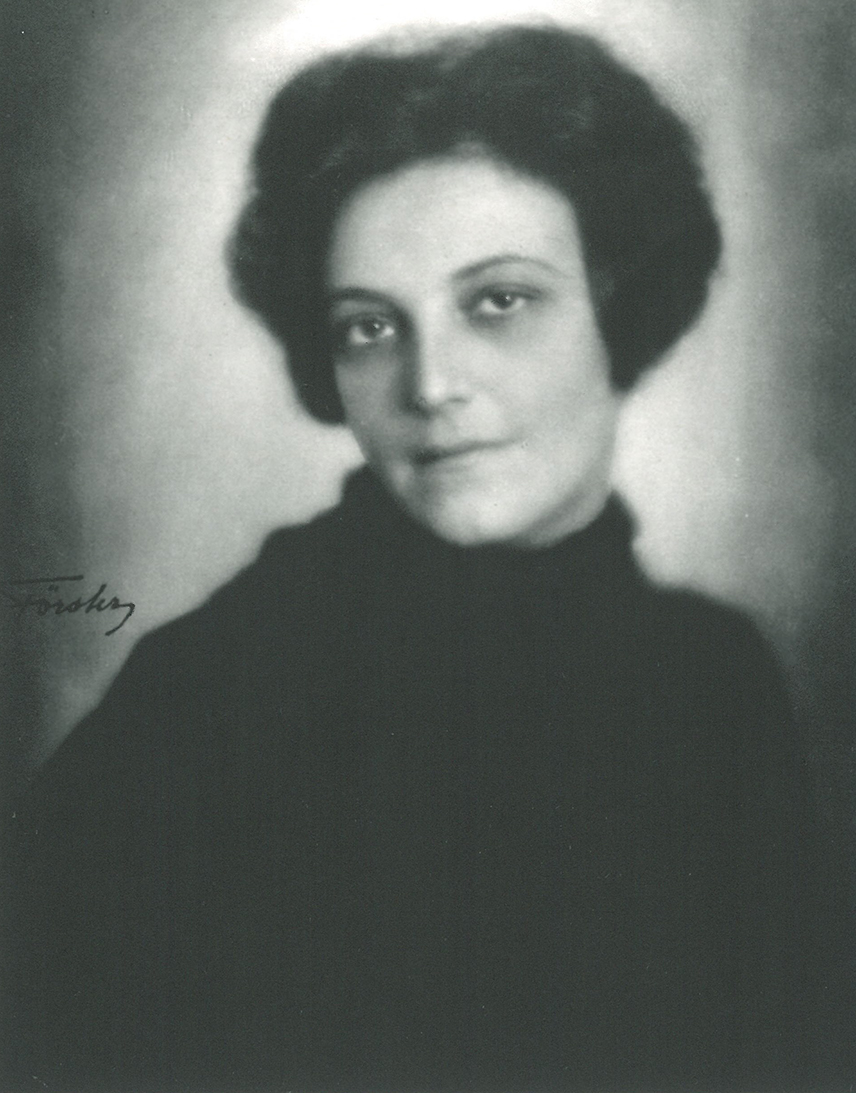
Writer, painter, displaced person
Melanie Herzl was born in Vienna in 1893. Her father converted from Judaism to Catholicism in 1895 and changed the family name to Hartwig. After training as an actress at the Vienna Conservatory, she had engagements at various theatres. In 1921, she married the Jewish lawyer Robert Spira and moved to Graz with him, where she wrote her first literary works. In 1927, she entered her novella Das Verbrechen (The Crime) in the literary competition of the journal Literarische Welt and was the only female author to receive a distinction from the jury member Alfred Döblin. Stefan Zweig put her in touch with the Viennese publishing house Paul Zsolnay, which signed Hartwig in 1928 as its first Austrian woman author and published her collection of novellas Ekstasen (Ecstasies) in 1928 and her novel Das Weib ist ein Nichts (The Woman is Nothing) in 1929.
By the end of the 1920s, bourgeois literary critics already considered Hartwig’s work, which depicts female sexuality and deals with topics such as father-daughter incest, abortion and rape, to be offensive. After the Zsolnay publishing house refused to publish her books from 1931 onwards out of consideration for the German Reich market, the pogrom novella Das Wunder von Ulm (The Miracle of Ulm) was published in 1936 by an exile publishing house in Paris, and Spira also began to paint.
In 1938, immediately after Austria’s annexation by Hitler’s Germany, Mela and Robert Spira fled to London, where they struggled to build a new life for themselves. Despite her proximity to British intellectual circles – her acquaintance with Virginia Woolf was particularly important to Ms. Hartwig – isolated from the German-speaking literary world, the writer was unable to publish anything except for a few works. However, Ms. Hartwig-Spira, who devoted herself entirely to painting at the age of sixty, celebrated success as a painter. The persistent anti-Semitism in post-war Austria and the slow pace of restitution prevented the Spira couple from returning to Styria. Ms. Hartwig-Spira died in London in 1967, shortly after which her husband took his own life. It was not until the 1990s that her literary work was rediscovered.