Olga Rudel-Zeynek
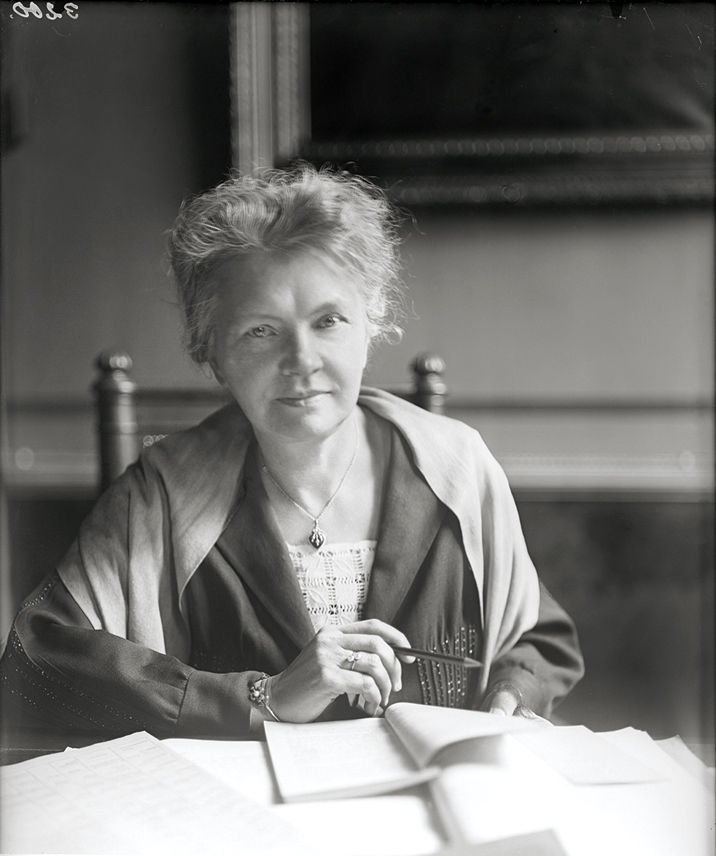
Pioneer in parliament
Born in Olomouc (Moravia), Olga Zeynek received the education customary for daughters of ‘good family’. In 1897, she married the officer Rudolf Rudel but divorced him in 1918. Shortly before the outbreak of the First World War, she moved to Graz, where she volunteered in war relief efforts, wrote short stories for various newspapers, and was active in the Catholic Women’s Organisation of Styria. This led to her involvement in the Christian Social Party. On their behalf, she became the first woman to be elected to the Styrian state parliament in 1919/20, alongside Marianne Kaufmann and the Social Democrat Martha Tausk, and represented them in the National Council from 1920 to 1927 and in the Federal Council from 1927 to 1934.
She served as President of the Federal Council in 1927/28 and 1932, making her the first woman in the world to head a parliamentary body. Significant results of her parliamentary work were the law prohibiting the sale of alcoholic beverages to young people (1922) and the law protecting the maintenance claims of single mothers, which was named after her, ‘Lex Rudel-Zeynek’ (1925). She was also particularly committed to the interests of individual female professional groups, better education for girls, the protection of children and young people, and combating women’s unemployment.
In addition, she volunteered for charitable organisations. From 1934 onwards, after the end of democratic parliamentarianism, she became increasingly involved in charitable work and returned to her writing. As early as the 1930s, she warned against National Socialism. After 1945, she was active in the Austrian People’s Party’s ‘Austrian Women’s Movement’. She died in Graz in 1948.